
Thrive By Design™ - Group
Group Coaching for Life After Treatment

Is this program for you?
You finished treatment. Now what?
The care that surrounded you during treatment has stepped back, but your health still needs attention.
Thrive By Design™ is for women who have finished their initial breast cancer treatment and are ready to give their health and quality of life more attention.
You might recognize yourself here:
- You finished treatment, but you don't feel like yourself
- You're tired, sleeping poorly or struggling with changes in your energy
- You feel weaker than you did before treatment and aren't sure how to rebuild strength safely
- Your weight, blood sugar or cholesterol has changed, and you want to understand why
- You're dealing with brain fog, mood changes or anxiety
- Sex is uncomfortable, your desire has changed, or you don't know what options are available
- You're taking medication after treatment and want to understand its effects on your body
- You have lab results and scan reports but aren't sure what they mean for your health
- You want to know what to focus on, what to track and what questions to bring to your doctors
Program Philosophy
We Do it Together
You shouldn't have to figure out how to feel better on your own.
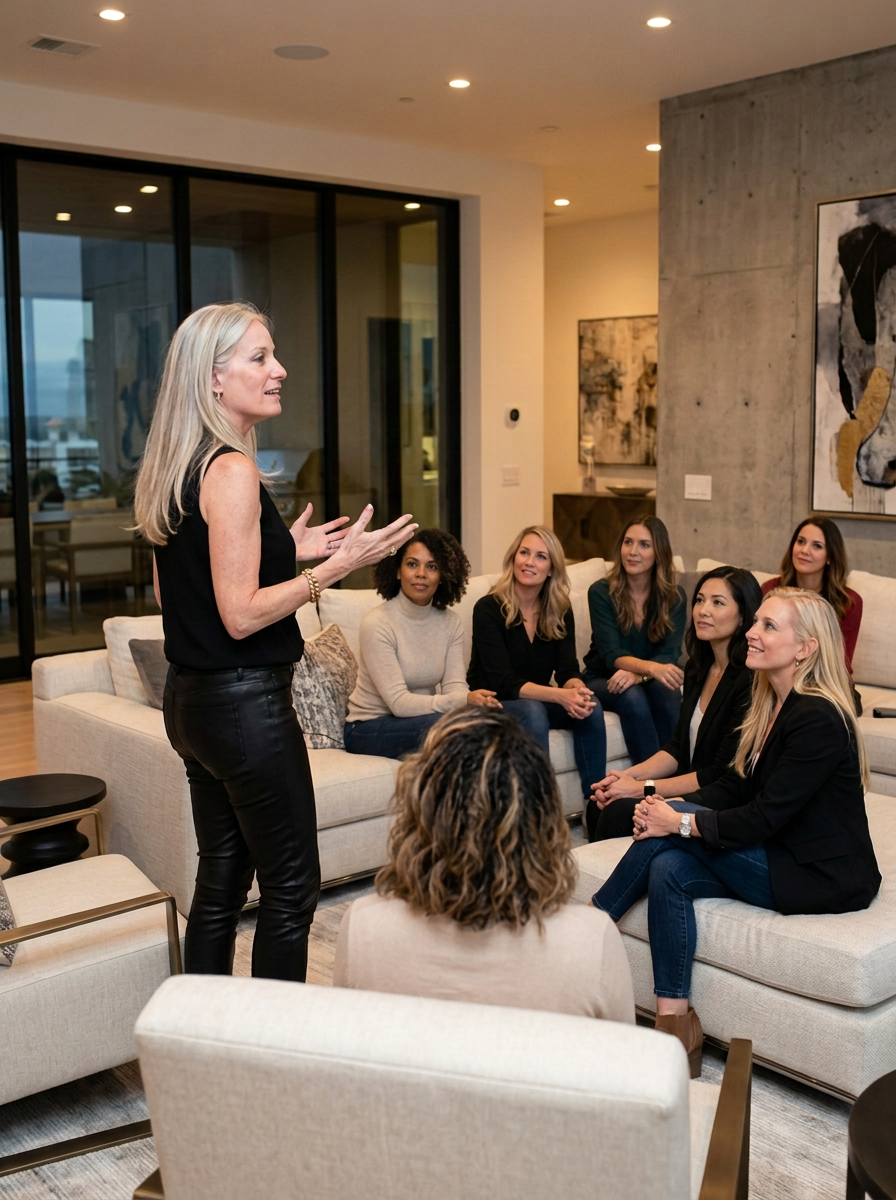
This program is for women who want the structure of Thrive By Design™ and the company of women who are living it too. It is built on a clear truth: the habits you build alongside others are the ones you keep. The same 10 treatment-affected domains, the same assessments and coaching, worked through with a max of twelve women who understand what you've been through.
There is something that shifts when you hear another woman name the exact thing you've been carrying in silence. The group creates that space: a place to learn, build, and sustain progress that lasts because you didn't do it alone.
How the program works
You don't have to just come out cancer-free; you can feel good.

-
We start by understanding where you are
We review your health history, treatment experience, current concerns and goals. Validated assessments and relevant labs establish a baseline.
-
We work on the areas that matter
Each week, we explore a different aspect of health, connect the science to your experience and identify practical steps worth trying. These are experiments, not homework.
-
We track what changes
We repeat assessments during the program and at the end, and compare your results with your starting point. We look at what is working, what needs more attention and what you want to carry forward.
-
You leave feeling good in your body and enjoying your life again
You understand what your body needs and what protects it, and you trust yourself to keep the changes going. Your maintenance plan shows what to keep doing, what to keep working toward and when to retest.
My body and mind are responding SO positively. My feeling of reconnecting to myself … and the energy shift in all areas have been noticed by my family and loved ones.
12 weeks
The program outline
Phase 1
Know Where You're Starting
Understand your health today and set your goals.
Module 1 +Your Vision and Baseline: Set Clear Priorities and Know Where You Stand
Your body has changed, and it can be hard to know what's related to treatment, medication, menopause or something else. We review your health history, establish your baseline with validated assessments and labs, and identify what matters most to you. You'll leave with priorities and goals that reflect your life, not a generic wellness checklist.
Module 2 +Stress and the Nervous System: Feel Calmer and In Control
If small things feel harder to handle than they used to, there may be a physiological reason. You'll learn how stress affects your body and how changes associated with treatment and menopause can influence your stress response. We'll explore practical tools and identify which ones are worth trying in your daily life.
Module 3 +Sleep and Night Sweats: Sleep More Deeply and Wake Up Rested
Night sweats and 2 a.m. wake-ups make everything else harder, and they're common after treatment. You'll learn why your sleep changed, how cognitive behavioral therapy for insomnia (CBT-I) and a few everyday habits can improve it, and your options for hot flashes and night sweats, so you can choose what fits you.
Phase 2
Build Your Physical Health
Work on the physical changes that affect how you feel, move and live.
Module 4 +Exercise for Bone, Muscle and Heart: Rebuild Your Strength
You may feel weaker than you did before treatment, your joints may ache, and you may not know what's safe or effective. You'll learn what treatment and menopause can do to your bones, muscles and cardiovascular system, and how different kinds of exercise support your health. We'll look at strength training, aerobic exercise, balance and flexibility, including considerations for women with lymphedema or a risk of it.
Module 5 +Food and Metabolism: Eat in a Way That Supports Your Body Now
Your weight, body composition, blood sugar or cholesterol may have changed, and the advice you've followed for years may not work the same way. You'll learn how treatment and menopause can affect metabolism, muscle and gut health. We'll cover protein, fiber, meal timing and the Mediterranean-style eating pattern, along with clear answers to common questions about food after breast cancer.
Module 6 +Intimacy and Sexual Health: Find Comfort and Pleasure Again
Changes in your body can affect comfort, desire, relationships and how you feel about yourself. You may have pain with sex, vaginal dryness, urinary symptoms or less interest in intimacy. We'll explain what can happen after treatment and menopause, how desire works, and what options are available. You'll also have space to consider what intimacy means to you now and how to talk about it with a partner or healthcare professional.
Phase 3
Understand Your Mind and Mood
Make sense of changes in thinking and emotions, and learn what can help.
Module 7 +Brain and Mind Health: Manage Brain Fog and Think More Clearly
You lose your train of thought, struggle to find words or feel less sharp than you did before treatment. You may also notice changes in anxiety or mood. We'll look at how treatment and hormonal changes can affect the brain, what other factors are worth checking and what supports cognitive health. You'll learn practical strategies for everyday brain fog and when to seek further evaluation.
Module 8 +Emotional Health: Handle Hard Feelings with Confidence
Treatment may be over, but the emotional effects don't necessarily end with it. You may be dealing with grief, fear of recurrence, scan anxiety or pressure to feel grateful and positive. We'll explore why these feelings can persist, how menopause may affect emotional health and what kinds of support can help you move through difficult periods.
Module 9 +Purpose, Joy and Career: Choose Where Your Time and Energy Go
After treatment, you may look at your work, relationships and priorities differently. You might be deciding whether to return to work, how much to take on or where you want your time and energy to go. We'll make room for those questions and look at practical ways to align your next chapter with what matters to you.
Phase 4
Carry It Forward
Keep what's working going after the program ends.
Module 10 +Your Environment: Create a Home That Supports Your Health
Your home should support the life you're trying to build. We'll look at your surroundings, from the spaces where you rest to the products you use every day. Rather than trying to change everything, you'll learn how to assess what's worth a second look and where a practical swap may make sense.
Module 11 +Financial Health: Take Control of Your Healthcare Costs
The bills don't always stop when treatment ends. You may have taken time off work, paid a lot out of pocket, or still have insurance questions and costs long after your last appointment. In this session, you'll get a clear picture of your finances and build a budget. You'll also learn how your insurance works, how to choose the best plan, what to ask about coverage and costs, and where to go for help.
Module 12 +Your Maintenance Plan: Carry Your Progress Forward
You started with questions about your health and where to focus. Now it's time to look at what you've learned and what has changed. We'll repeat your assessments and relevant labs, compare them with your baseline and build your maintenance plan for the months ahead. You'll leave knowing what to keep doing, what to keep working toward and what to track.
What's Different
What makes Thrive By Design™ different
This is not general wellness coaching with a breast cancer label added.
Thrive By Design™ is built specifically for women after breast cancer treatment. It brings together:
An understanding of treatment:
Education about the effects of breast cancer treatment and the medications that may follow it
A personal plan:
Goals based on your health history, data, priorities and life, with validated assessments and relevant labs, and repeat assessments during and at the end of the program
Resources built for you:
Evidence-based handouts, guides, and tools for each domain delivered before sessions so your group time focuses on coaching and connection
The subjects that often get missed:
Bone and muscle health, metabolic health, cognition, mood, sexual health, work and finances
Preparation for medical appointments:
A clearer understanding of your health information and better questions to take to your healthcare team
12 weekly group sessions:
A short teaching on the week's domain, then coaching on what the group needs most. You leave with your own goal for the week, and a few ideas you would not have found on your own.
A community that gets it:
Connections with women who understand what you've been through, built on trust, vulnerability, and shared growth.
Hybrid option available:
Want deeper individual support? Add private 30-minute coaching sessions between group meetings. Reach out to learn more.
I do feel stronger since I started and attribute that to being consistent with pilates … and also I feel much more capable of managing some of the side effects by monitoring my eating.
I'm proud I changed my routine up. My body does better when I move more.
Where To Start
Getting started
Spots are limited to keep the group intimate and the coaching deep.
Schedule a discovery call: a complimentary conversation about your goals, your questions and whether the program is the right fit
Complete your onboarding: a set of comprehensive assessments that help us personalize your experience within the group
Start thriving: in your first session, we build a group vision and finalize your individual vision and goals
The result
A body you trust again, a plan that's yours and the confidence to advocate for the care you need, so you feel like yourself and enjoy your life again.
Schedule a discovery callJoin the WaitlistThree Steps to Feeling Better: This is the central tool for identifying the gap between where you are now and where you want to be.
Ceyora Substack
The medical world dropped you after breast cancer treatment, and you are expected to be fine. Spoiler: you’re not. A playbook for getting your health and life back. 13+ years out, NBC-HWC, former PT and tech exec. Subscribe for exclusive content.